
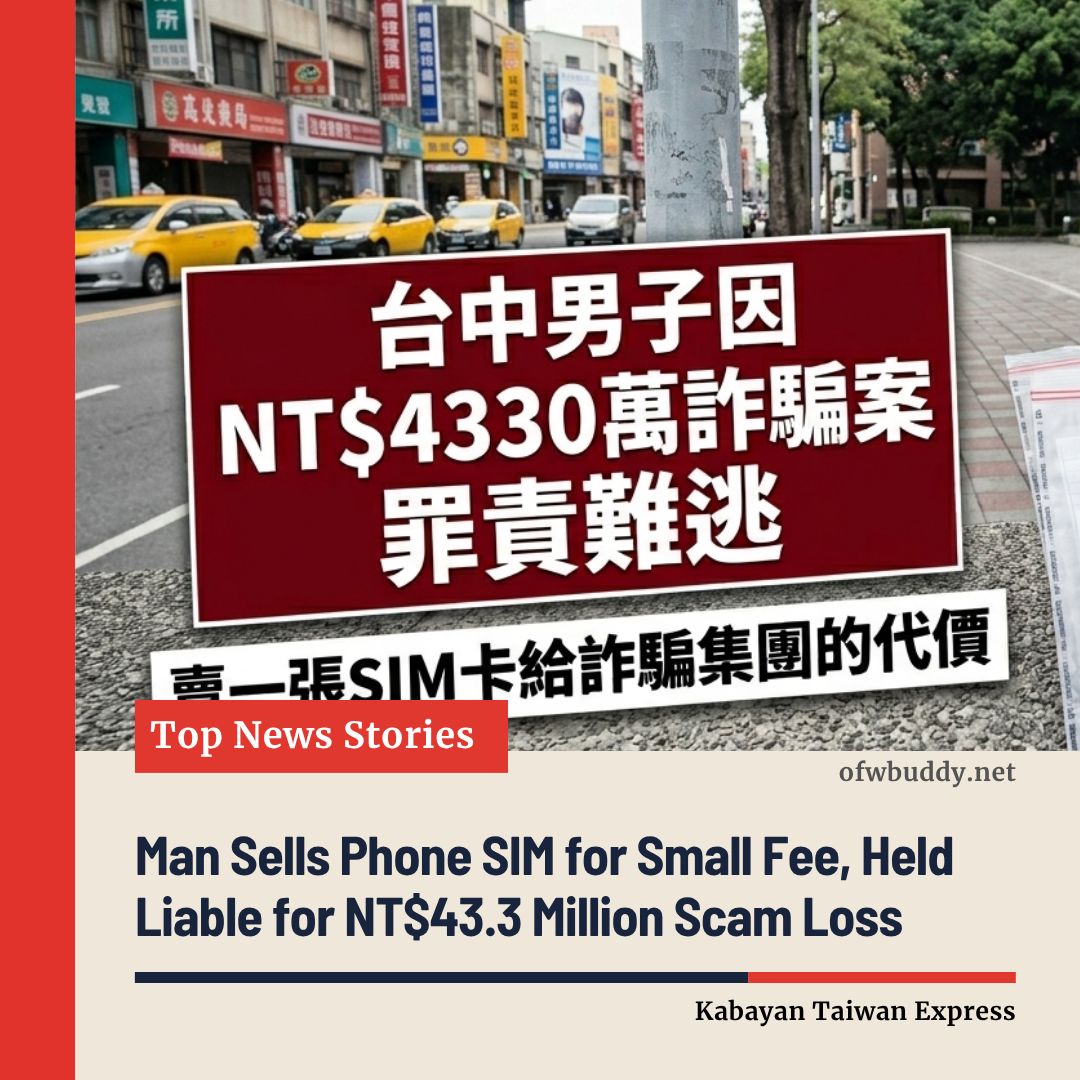
TAICHUNG CITY, Taiwan — A man who sold his registered mobile phone number for a small cash reward has been ordered to pay millions in damages after the number was used in a large-scale fraud case that victimized an unsuspecting woman.
According to an investigation by prosecutors and police, a man surnamed Lin handed over a SIM card he personally registered to an unidentified individual in February 2024 in exchange for just NT$1,000. The number was later used by a fraud syndicate posing as law enforcement officers from Taipei.
The group contacted a woman surnamed Fan through phone calls and the messaging app LINE, falsely claiming her bank account was involved in money laundering and that she needed to cooperate with an investigation. Believing the scheme, the victim transferred money multiple times between early May and late June. It was only after losing a staggering NT$43.3 million that she realized she had been deceived.
Authorities said Lin was later involved in a separate fraud case in December of the same year, where he posted a fake advertisement for fishing rods on Facebook. After receiving NT$6,860 from a buyer, he withdrew the money and cut off communication.
In criminal proceedings, the Taichung District Court found Lin guilty of assisting fraud and committing online fraud. Although he admitted his actions and settled the smaller case with the fishing rod buyer, he has yet to compensate the primary victim. He was sentenced to six months in prison for aiding fraud and an additional seven months for online fraud.
On the civil side, the victim filed for damages, arguing that Lin’s act of providing the SIM card directly enabled the scam. The court agreed, ruling that Lin knowingly risked his number being used for illegal activities and effectively collaborated with the fraud group.
The court declared Lin a joint tortfeasor and ordered him to pay the full NT$43.3 million in damages. He failed to appear in court or submit a defense, which was taken as an admission of liability. The ruling may still be appealed.
The case serves as a stark warning about the consequences of carelessly providing personal information or communication tools, which can be exploited for criminal activities with severe legal and financial repercussions.