
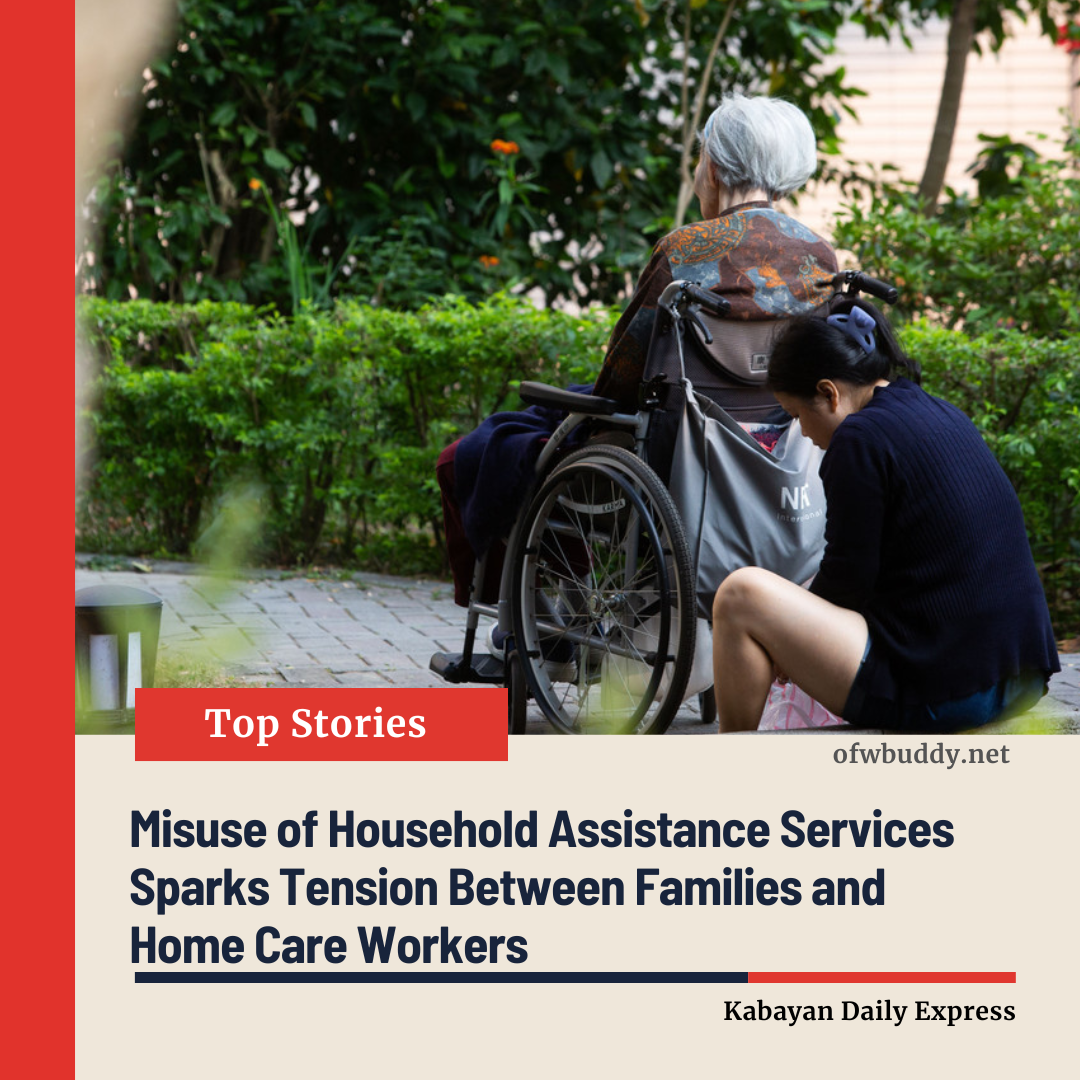
NEW TAIPEI CITY — December 1, 2025 — A recent incident involving a home care worker in New Taipei City has reignited public discussion about the misuse of government-funded household assistance services under Taiwan’s Long-Term Care 2.0 program.
The dispute occurred when a home care worker, scheduled to perform basic tasks such as making the bed and changing bedsheets, was asked by a client’s family member to also water plants, take out the trash, and scrub the kitchen sink and range hood. When she clarified that these tasks were not part of the approved service plan, the family member insisted that such chores were her responsibility, leading to a heated exchange.
Professionals Say Home Care Workers Are Being Treated Like Low-Cost Cleaning Help
According to Huang Yi-man, head of the Home Care Service Supervisor Group in New Taipei City, the government’s BA15 Household Assistance program is increasingly misunderstood. She emphasized that home care workers are not cleaning staff nor caregivers, yet many families treat the service as an inexpensive way to outsource full household cleaning.
Huang explained that BA15 was originally intended to help elderly or disabled individuals maintain a basic level of cleanliness to prevent health risks. However, after years of implementation, the service has become the most frequently disputed item in the home care system. Many workers, she noted, face verbal criticism when they decline requests for tasks outside their remit. Some families even check cleaned areas with their fingers or toilet paper, a practice workers describe as humiliating.
“I Trained for Caregiving, Not Deep Cleaning”
One home care worker expressed frustration on social media, saying she had been trained to observe changes in breathing, posture, and overall condition of the elderly. Instead, she often finds herself wiping windows, mopping floors, and removing stubborn kitchen grease — tasks unrelated to her professional skills.
Blurred Definitions in Long-Term Care 2.0 Create Operational Challenges
Taiwan’s Long-Term Care 2.0 program includes 22 categories of home-based services, but overlapping responsibilities continue to place workers in uncomfortable positions. Huang warned that performing services not specified in the case manager’s approved plan could be considered a violation, yet many families insist on additional tasks, creating ethical and procedural dilemmas.
Wang Yiting, executive secretary of the Enqin Home Care Agency in New Taipei City, said that the BA15 Household Chores Assistance category is particularly prone to conflict because of the significant cost gap between long-term care subsidies and standard cleaning service rates. While private cleaning companies typically charge NT$300 to NT$500 per hour, a subsidized BA15 session may cost a household as little as NT$63 for tasks like bathroom cleaning.
Ambiguity in “Self-Use” vs. “Shared Use” Spaces Adds to Confusion
Wang also pointed out inconsistencies in defining whether a space is used exclusively by the care recipient (“self-use”) or jointly with family members (“shared use”). In households where only one spouse is disabled but both live in the same residence, distinguishing between spaces becomes difficult. Out of concern for complaints, some workers choose the most permissive interpretation, often resulting in unreasonable workloads.
Call for Clearer Guidelines to Protect Home Care Workers
The ongoing misuse of BA15 services has eroded morale among home care workers and strained one of the most essential resources in the long-term care system. Wang stressed that most families follow the guidelines faithfully, but the government must clearly define service boundaries to prevent further abuse.
“Long-term care relies on mutual respect,” she said. “Clearer rules are needed to protect both workers and care recipients and to ensure that long-term care resources are used responsibly.”