
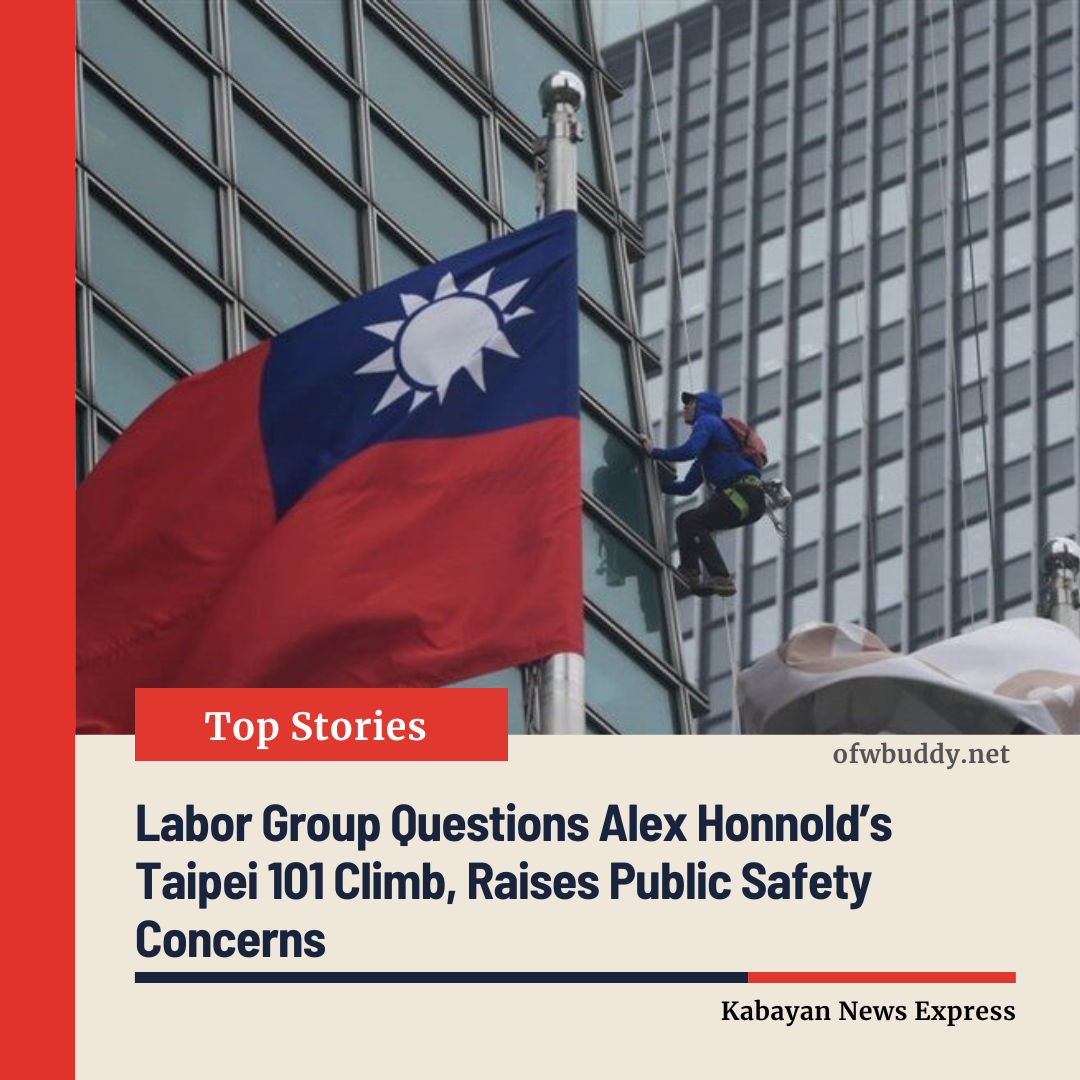
Taipei, Taiwan — January 26, 2026 — American free-solo climber Alex Honnold successfully climbed Taipei 101 on January 25, earning widespread praise from audiences in Taiwan and abroad. However, the event has also sparked controversy after a labor rights group raised concerns about occupational safety and public risk messaging.
The Industrial Injury Association criticized the Taipei City Department of Labor and Taipei 101 management for allowing the high-risk climb without visible protective measures. The group argued that showcasing such a dangerous activity as a promotional event could weaken public awareness of workplace safety.
The association’s remarks triggered strong reactions online, with critics pointing out that Honnold is a world-renowned climber supported by a professional team and extensive preparation. Some netizens argued that extreme sports should not be compared to workplace accidents and emphasized that Taipei 101 would not open its structure to the public for similar stunts.
Clarifying the Core Issue
In a seven-point statement released on January 26, the association clarified that its concern was not about Honnold’s professional skills, but about how high-risk activities are promoted in public spaces.
The group said the debate should focus on whether the event represents a systematically promoted high-risk activity, especially when coordinated by corporations or government-linked entities. According to the association, such events become part of public governance and social messaging, not merely private personal challenges.
Public Responsibility and Risk
The association also stressed that personal liability waivers do not eliminate public responsibility. They warned that allowing high-risk activities in landmark buildings without public discussion could set a problematic precedent.
Contradictions in Social Values
The group questioned whether society sends mixed messages by celebrating unprotected high-altitude stunts while continuing to face fatal workplace falls. They argued that this contradiction highlights inconsistencies in how risk and safety are valued.
Call for Equal Safety Standards
While acknowledging the meticulous planning and training behind Honnold’s climb, the association asked why similar safety standards are often absent at construction sites, where workers are sometimes pressured to prioritize speed and cost over safety.
Government and Corporate Accountability
The statement also urged authorities and corporations to clarify their roles when such events are promoted as part of city branding or international publicity. The group emphasized that discussing regulatory responsibility does not mean opposing extreme sports.
Not Opposed to Extreme Sports
The association reiterated that it is not against extreme sports and is not seeking publicity. Instead, it aims to highlight occupational safety issues and the unequal way risk is discussed depending on who takes it.
The group concluded that while professional risk-taking deserves respect, human life should not be treated with double standards, expressing hope that the debate will lead to stronger awareness of risk management and workplace safety.