
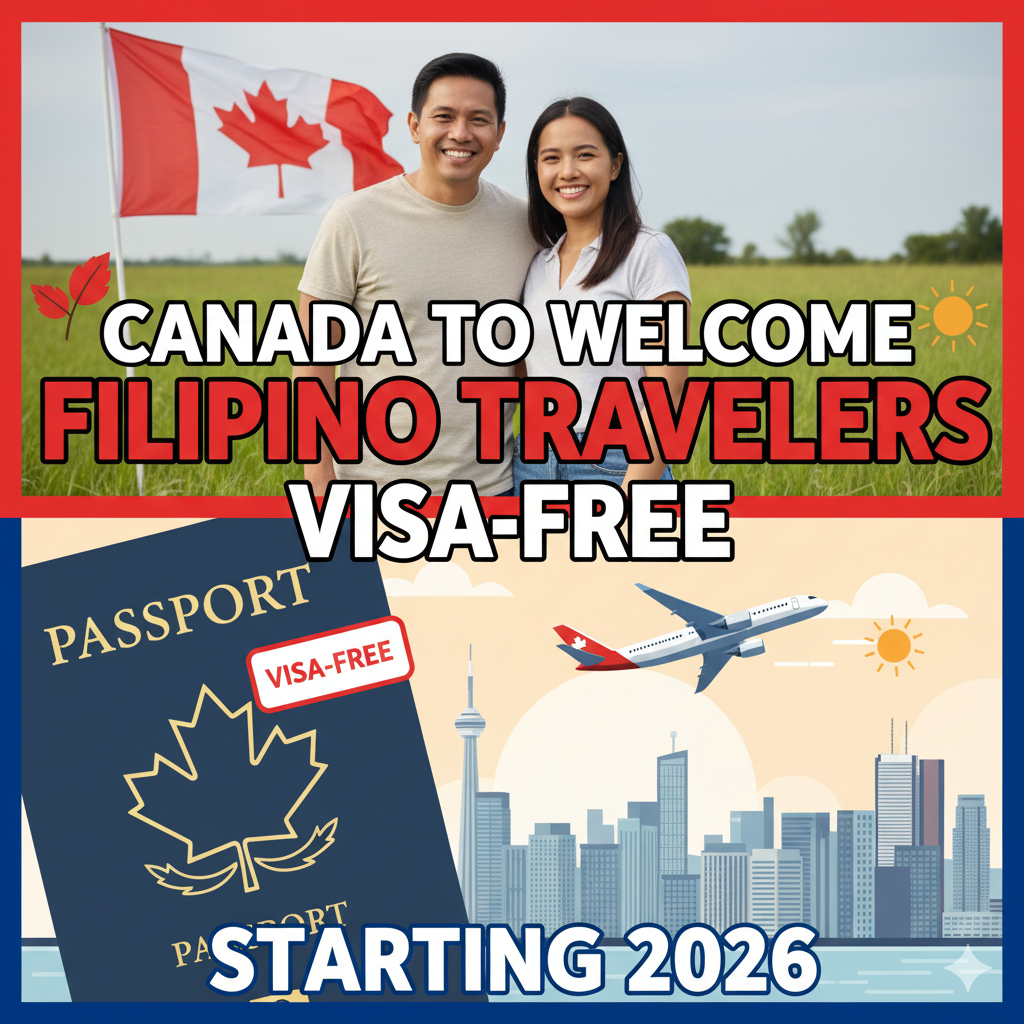
MANILA, Philippines – Beginning in 2026, Filipinos will be able to travel to Canada without the need for a traditional visitor visa, as the country adds the Philippines to its visa-free entry program, Immigration, Refugees and Citizenship Canada (IRCC) announced. The move aims to simplify travel and reduce costs for eligible travelers.
eTA to Replace Traditional Visa
Eligible Filipino travelers can now apply for an Electronic Travel Authorization (eTA) instead of the conventional visitor visa. The eTA carries a fee of CAD 7 (approximately PHP 301), a significant reduction from the standard CAD 100 charged for a traditional visa. The eTA is electronically linked to the passport and remains valid for up to five years or until the passport expires.
Other Countries Included
The 2026 visa-free entry program also covers Thailand, Argentina, Costa Rica, Morocco, Panama, Seychelles, Uruguay, Antigua and Barbuda, St. Kitts and Nevis, St. Lucia, St. Vincent and the Grenadines, and Trinidad and Tobago. Citizens of these countries are similarly eligible to apply through the eTA system.
Eligibility Requirements
The eTA is available only to “known travelers,” such as those who have held a Canadian visitor visa in the past 10 years or those currently holding a valid U.S. non-immigrant visa. The authorization is air travel only, meaning cruise ship arrivals still require a regular visa.
Application Process
Applicants must have a valid passport, an active email address, and a credit or debit card. Payments from Philippine accounts through GCash, Maya, BPI, or BDO are automatically converted, typically totaling PHP 305–320 due to bank charges. Once approved, the eTA allows multiple entries to Canada under the authorized period.
Implications for Filipino Travelers
This policy is expected to open up more travel opportunities for Filipinos, particularly for tourism, short visits, and family trips. With lower costs and fewer requirements, Canada becomes a more accessible destination, strengthening ties between the two countries and encouraging international travel starting 2026.