
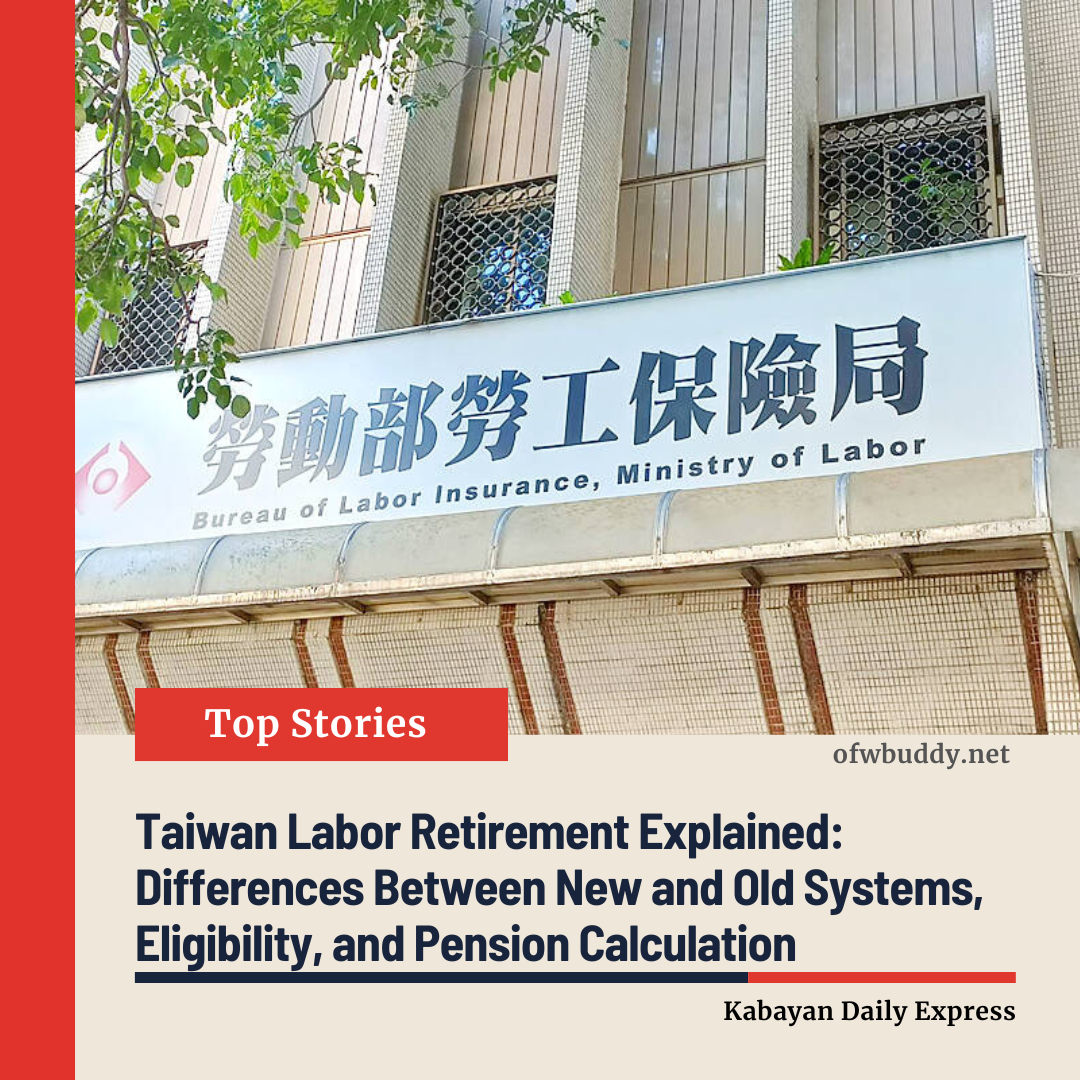
Taipei, Taiwan — Labor retirement pensions remain a crucial source of financial security for many Taiwanese workers after leaving the workforce. To help the public better understand the system, here is a clear breakdown of how the old and new labor retirement systems work, who qualifies, how benefits are calculated, and what workers should pay attention to when planning for retirement.
Old vs. New Labor Retirement System: What’s the Difference?
Taiwan currently operates two retirement pension systems for workers: the old system and the new system, depending on when the employee began working.
Old Labor Retirement System
Based on the Labor Standards Act, this system primarily applies to workers hired before July 1, 2005. Under this scheme, employers manage the retirement reserves, and the funds do not belong personally to employees. If a worker resigns or the company shuts down, their accumulated seniority may be cleared.
New Labor Retirement System
Launched on July 1, 2005, under the Labor Pension Act, employers are required to make monthly contributions to an individual retirement pension account overseen by the Bureau of Labor Insurance. Unlike the old system, the funds belong to the worker and remain intact even if they change jobs or their employer ceases operations.
How to Know Which System Applies to You
The simplest way to determine your coverage:
-
Started work after July 1, 2005 → Automatically under the new system.
-
Started work before July 1, 2005 → You may be under the old system unless you opted to switch.
Workers who are unsure may check with their company’s HR department or inquire with the Ministry of Labor.
Eligibility for Old-System Retirement Benefits
Employees retaining old-system seniority must meet one of the following conditions under Article 55 of the Labor Standards Act:
-
At least 55 years old with 15+ years of service in the same company.
-
25 years of service with the same employer, regardless of age.
-
At least 60 years old with 10+ years of continuous service.
Importantly, only uninterrupted service with the same employer counts. Changing jobs or company closure resets old-system seniority and disqualifies workers from claiming old-system benefits.
How Old-System Pensions Are Calculated
Before calculating the pension amount, the employee’s base amount must be determined.
Calculation method:
-
First 15 years of service → 2 base units per year
-
Years exceeding 15 years → 1 base unit per year
Formula:
Old-System Pension = Average Wage (last 6 months) × Base Amount
Since the funds come from the employer, workers must claim old-system benefits directly from their company—not from the labor insurance authorities.
New Labor Retirement System: Who Can Claim and How
Eligibility
Under Article 24 of the Labor Pension Act:
-
Workers aged 60 or above may claim their new-system pension, whether employed or not.
-
Workers who lose the ability to work can apply earlier.
-
If an employee passes away before claiming, their beneficiaries or heirs may claim the full amount.
Claim Options
-
15+ years of contributions → Choose between a lump-sum payment or a monthly pension.
-
Less than 15 years of contributions → Only lump-sum withdrawal is allowed.
Once chosen, the claim method cannot be changed.
How New-System Returns Are Distributed
The Labor Retirement Fund is centrally invested by the Labor Funds Management Center. Annual returns are credited to workers’ individual accounts. Notably:
-
Even in years when the fund sees losses, employee principal is guaranteed.
-
The government ensures a minimum return equal to standard bank fixed-deposit interest rates.
This “guaranteed return” protects workers’ savings from negative market performance.
Can You Claim Again After Receiving a Lump-Sum? Yes.
Workers who have claimed their new-system pension and later secure new employment will continue to receive employer contributions to their retirement account. These new contributions can again be withdrawn later, allowing continuous pension accumulation.
How Monthly Pensions Are Calculated
Monthly payouts are based on:
-
Total principal + accumulated investment returns
-
Divided according to a standard life expectancy formula
The monthly amount is adjusted every three years based on investment performance.
However, unlike the Labor Insurance Old-Age Pension, the new-system monthly pension is not lifelong—payments stop once the account balance is fully used.