
Tainan, Taiwan — December 6, 2025
The Tainan Branch of the High Court has affirmed a lower court ruling in a labor dispute involving a 30-year-old construction painter who demanded more than NT$4 million in compensation for alleged long-term health damage. The court ruled that only his heat exhaustion incident qualified as an occupational injury, rejecting his broader claims.
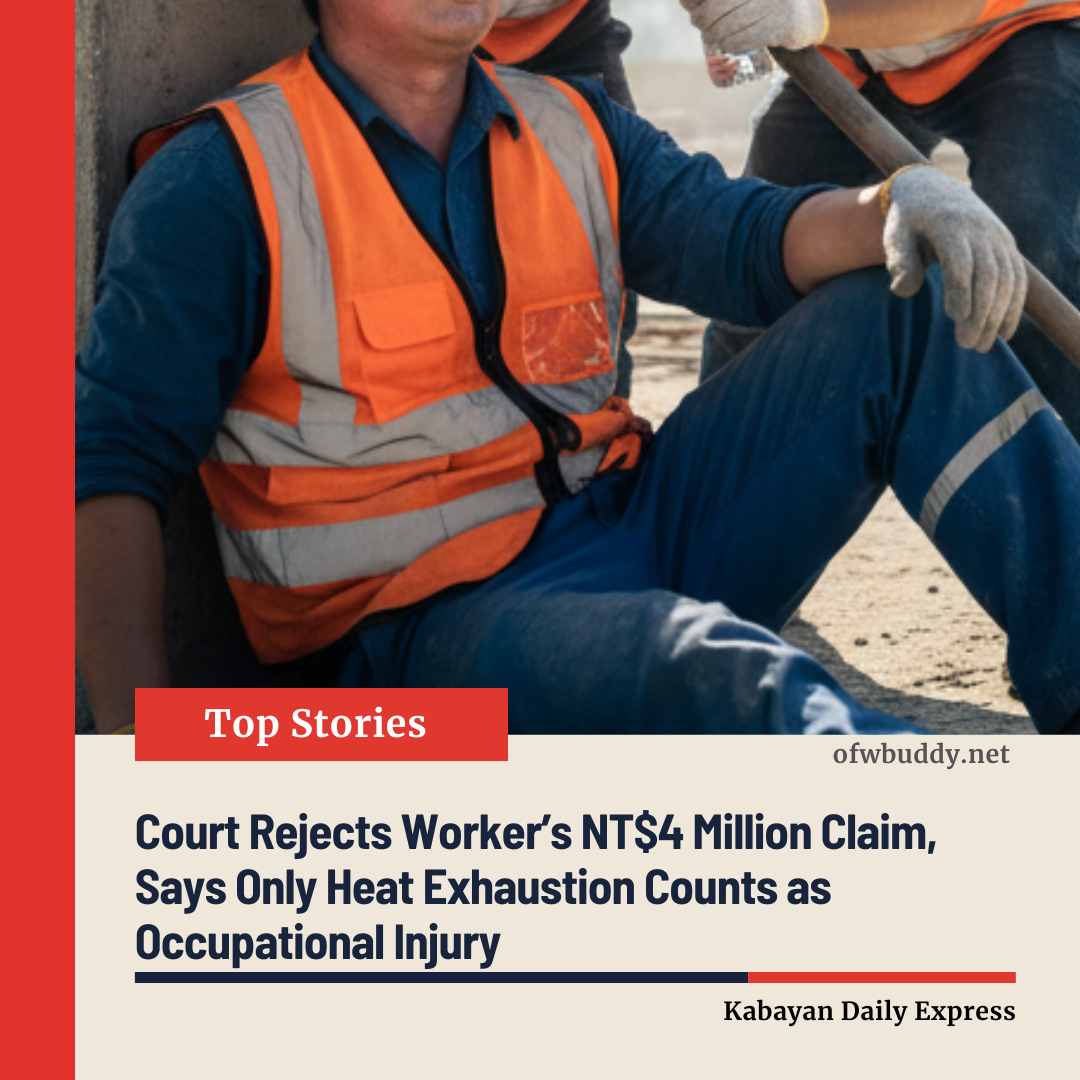
The worker, identified as Pan, fell ill in the summer of 2020 while working at a construction site in the Mailiao industrial area, Yunlin County. Assigned to paint under intense sunlight for prolonged periods, Pan collapsed from heat exhaustion and was later diagnosed with acute kidney injury. He was hospitalized and continued receiving treatment after being discharged.
Pan later argued that prolonged exposure to high temperatures, dust, and toluene had caused continuing health problems, including symptoms he believed were linked to chronic hepatitis. He accused his employer of failing to provide proper rest periods and neglecting special medical examinations required for high-temperature work. Based on his claim of diminished work capacity, Pan sought compensation until his anticipated retirement at age 65, raising his total demand to over NT$4 million. This included medical costs, wage loss, transportation, and compensation for emotional distress.
The employer did not dispute that the heat exhaustion incident was work-related but contested Pan’s assertion that his liver problems were part of an occupational illness. Assessments from the Labor Insurance Bureau and Yunlin National Taiwan University Hospital stated that Pan’s kidney function had returned to normal during hospitalization. They noted that heat exhaustion typically resolves within a few months, and the paint materials he used lacked chemicals that would harm the liver. The medical team also found that Pan’s abnormal liver function was linked to preexisting conditions such as fatty liver disease, rather than his job duties.
The panel of judges accepted the expert evaluation and ruled that Pan’s occupational injury was limited to approximately four months of recovery, with no resulting disability. The court ordered the employer to pay NT$2,770 in medical expenses, NT$60,901 in wage compensation, NT$6,000 in transportation costs, and NT$6,000 for emotional distress.
All other claims—including chronic hepatitis as a work-related condition and compensation extending to retirement—were rejected due to insufficient medical and legal grounds.
The Tainan High Court upheld the original judgment, dismissing both Pan’s appeal and his attempt to expand his lawsuit.