
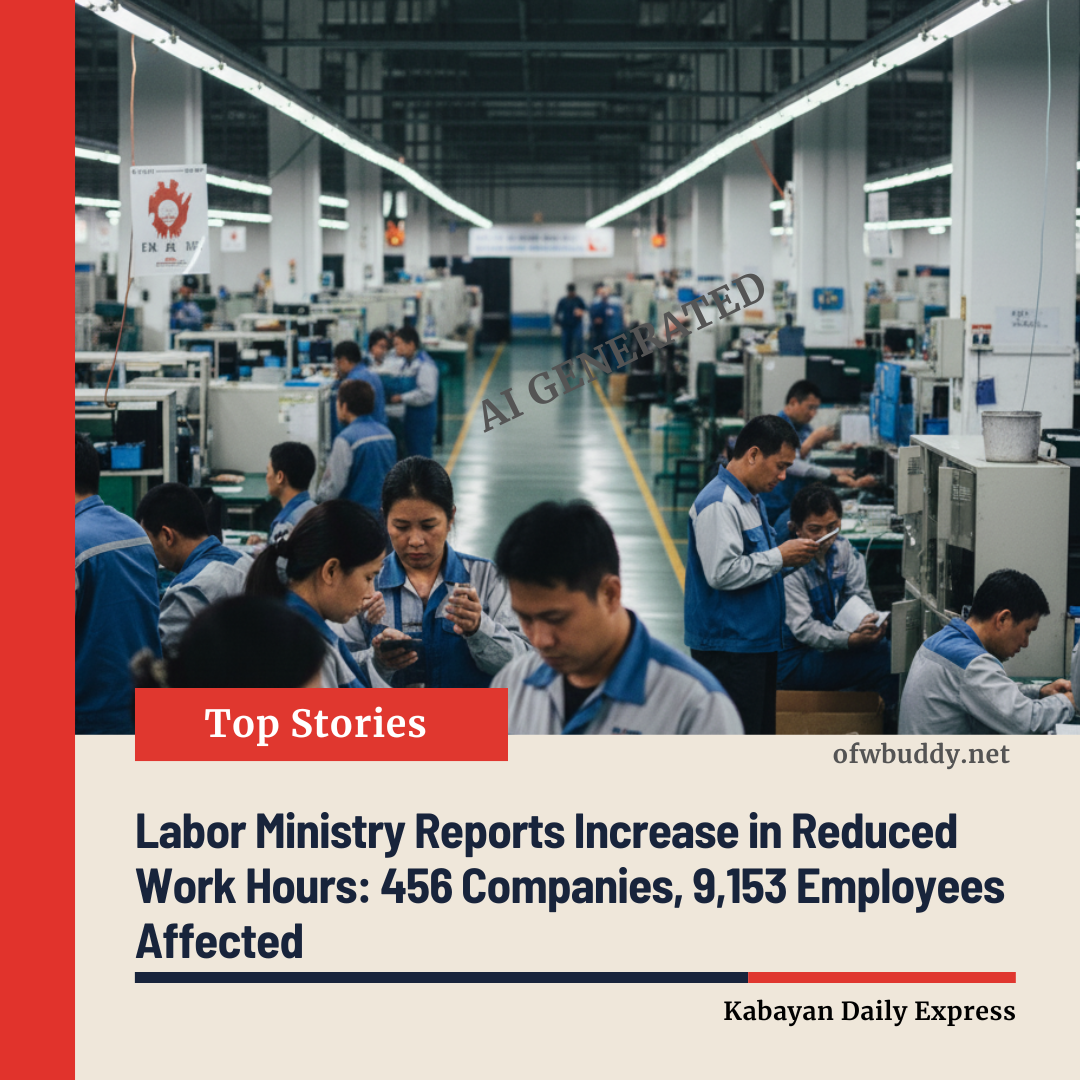
Taipei, (December 1, 2025) – The Ministry of Labor announced on July 1 that the latest round of reduced work hours affects 456 companies and 9,153 employees, marking an increase from the previous report on November 17, which involved 435 companies and 8,456 employees.
Among the affected businesses, 369 companies and 8,186 employees reported reductions linked to U.S. tariffs, with the manufacturing sector accounting for 8,619 employees, representing approximately 94.2% of the total workforce.
Most of the affected companies are small-scale enterprises with fewer than 50 employees, totaling around 417 companies or 90% of the total. The most common reduction involved four days or fewer per month, with most programs lasting three months or less.
Huang Chi-ya, Director of the Labour Conditions and Employment Equality Department, noted that the metal and electromechanical industries are the most impacted, with 300 companies and 6,404 employees reporting reduced hours. The increase of 697 employees is largely due to three newly reported businesses, each employing over 150 workers in machinery and equipment manufacturing, metal products manufacturing, and consumer goods production.
“These three large enterprises implemented reduced work hours due to tariff-related order fluctuations,” Huang explained. “Excluding them, the overall increase in employees taking reduced work hours is modest.”
The Ministry of Labor clarified that 71.9% of affected companies (328 companies) operate in industries eligible for employment stabilization measures, and nearly 77% of employees (7,034 people) can apply for wage difference subsidies. Employees receive up to 70% of the wage difference from the Ministry, supplementing their guaranteed minimum wage.
Workers not covered by employment stabilization measures may also apply for training allowances, receiving NT$190 per hour for up to NT$17,210 per month while participating in Ministry-provided training.
The Ministry emphasized that reduced work hours are not unpaid leave. Monthly salaries must not fall below NT$28,590, and businesses must continue to provide labor and health insurance and contribute to employees’ retirement funds.
“These measures aim to prevent layoffs and minimize unemployment risks,” the Ministry stated. “Every worker under reduced work hours has access to allowances and subsidies to support their economic well-being.”