
December 1, 2025 | Keelung, Taiwan
The Keelung City Environmental Protection Bureau (EPB) has announced a NT$500,000 fine against the local water supplier after tap water in Keelung City and New Taipei City’s Xizhi District developed an unusual oily odor. Officials say the issue stems from the Badu Pumping Station drawing raw water from a section of the Keelung River contaminated with oil.
According to the EPB, the odor was first detected on November 27, prompting an investigation at both the Badu Pumping Station and the Xinshan Water Purification Plant. Test results confirmed that the water source failed to meet the safety standards required under Article 6 of the Drinking Water Management Act, which mandates that all surface water used for drinking water must comply with strict quality criteria.
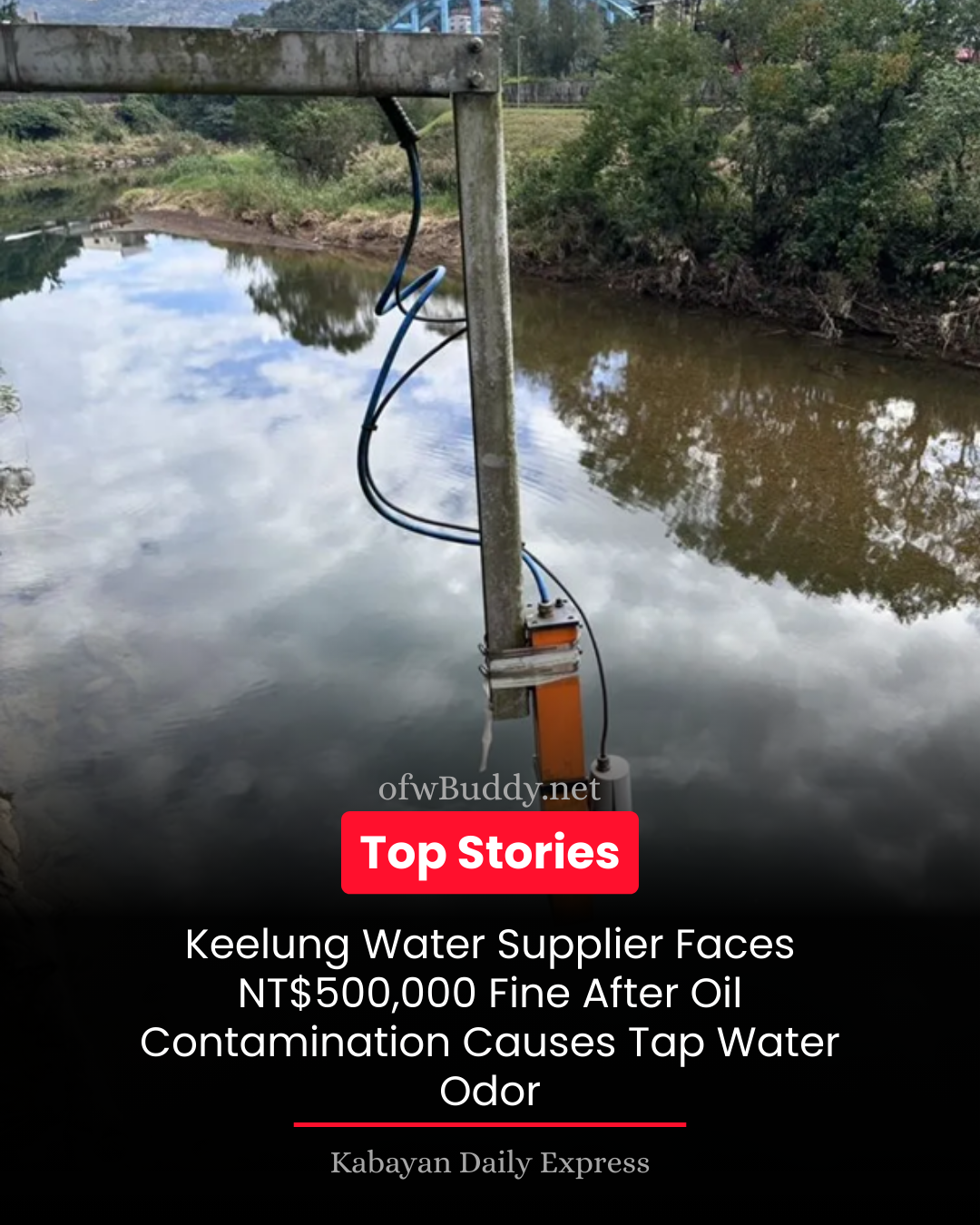
EPB Director Ma Chung-hao reported that inspectors discovered a malfunctioning oil-film detector at the pumping station during the inspection. He emphasized that the water company must clarify whether this equipment failure contributed to a delayed report of contamination.
Upon receiving the pollution alert, the EPB activated emergency response procedures within 30 minutes, conducting water quality sampling and pollution tracking along the river. The bureau has since expanded testing to nearby facilities, including the Johor Bahru Water Treatment Plant and its reservoir, to determine the extent of possible contamination.
The EPB stated that the incident may involve the introduction of hazardous substances into a drinking water source, which could pose a public health risk. Authorities are coordinating with the police, Taiwan Water Corporation, and other agencies to investigate the origin of the oil contamination. If evidence points to deliberate or illegal discharge, the case will be forwarded to the Keelung District Prosecutors Office for criminal prosecution under the Water Pollution Prevention Act and the Criminal Code.
Chen Chao-hsien, deputy director of the Water Company’s First District Management Office, said the company will meet with the EPB to understand the basis for the fine and will review internal procedures to determine necessary corrective actions.
Further penalties may be imposed if investigators find violations of the company’s Water Pollution Prevention and Control Measures Plan. Authorities assure the public that ongoing inspections and testing will continue until water quality is fully restored.